

Futuna Chapel Trust is excited to announce that the work has begun to replace the Chapel roof. This work will resolve two issues: it will ensure the Chapel is weathertight (the last replacement was in 1994) and it will bring the roof back into keeping with its original John Scott design. Those of you who may be visiting Futuna over the next few weeks and months will see scaffolding in place and the Chapel enshrouded in protective plastic.
A sneak peak under the shroud
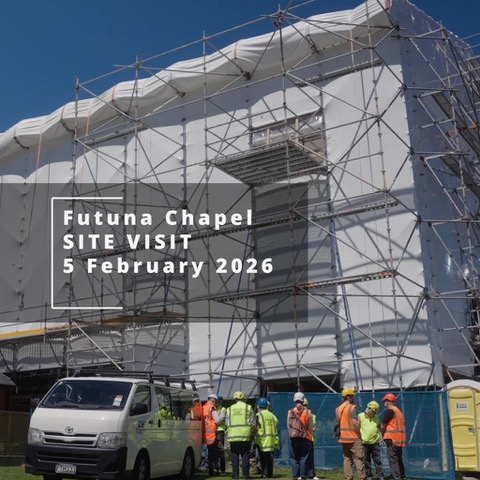
An exciting moment for our invited group of visitors today as we took them on a tour of the Chapel restoration under the shroud. See the action for yourself on our video
https://vimeo.com/1162908435/cbe2c6a7bc?share=copy&fl=sv&fe=c
Historic moment as first tiles go up
Kevin shares his passion for conservation
We couldn’t be happier that British designer, TV presenter and writer, Kevin McCloud has joined our team of supporters calling for assistance in covering the costs of restoring the Chapel.
October 2025 update: Work continues after extreme weather
Following the extreme wind and rain Wellington has experienced over the last week, the Chapel restoration work will resume today with contractors LT McGuiness moving to the next stage of the project.
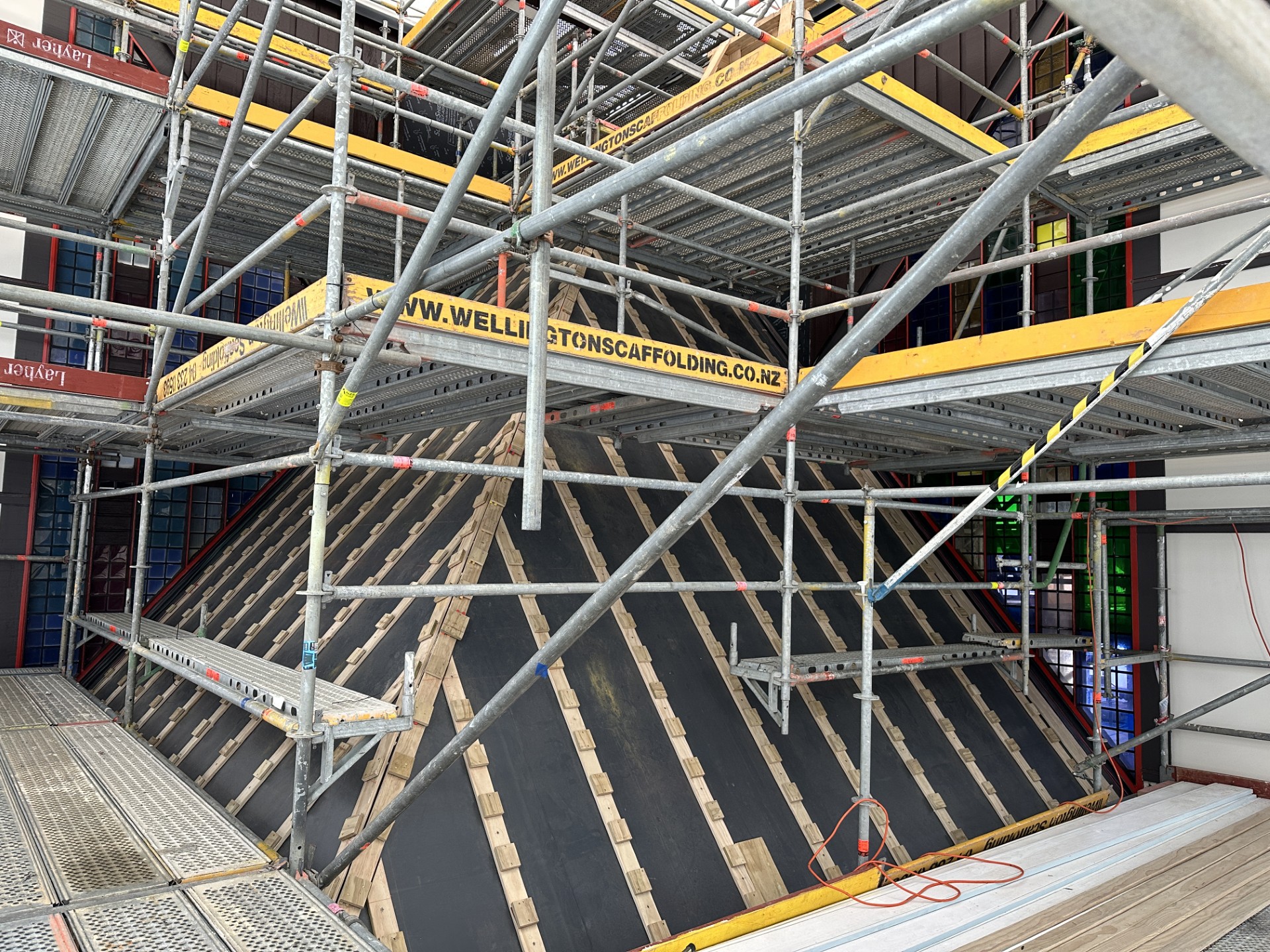
All asbestos has now been removed or encapsulated and we have completed the installation of the Fibertite membrane on the roof for increased water resistance.
With all the undulations in the roof planes and ridges (up to 35mm deviation in some places) we have installed packing under the battens to level the surface for fixing the ceramic tiles.
This week we are expecting to see the first of the flashings go up (copper slotted cavity closures) and the new roof gutters under the clerestory windows and adjacent walls. Following this, the porcelain tiles will begin to be fixed to the roof.
Futuna Chapel Trust would like to again thank our neighbours for their patience and understanding as we complete this work.


——-
April 2025 update: World first system shines a light on Futuna Chapel roof replacement
Re-roofing Futuna Chapel was never going to be an easy task. In perhaps a world first, Chapel trustee and Architect, Dr Peter Parkes together with Heritage Structural Engineer, Win Clark, have designed a bespoke roofing tile fixing system using rubber cushioning to hold the Chapel’s new porcelain roofing tiles in place; a system that means the Chapel tiles will be able to move under seismic, wind and thermal forces.
The system is based on using Spax stainless steel screws from Germany, sleeved in purpose made HDPE isolating grommets to reduce the stress around the screw fixings. The design also utilizes special gauged EPDM packing washers to create the appropriate tile overlap and cushioning between the tiles.
“We had to be cognizant of the potential fragility of the porcelain and ensure they don’t get overly stressed. Through the use of isolating grommets and rubber packings, the tiles will be able to move a little under seismic, wind and thermal expansion and contraction forces”, describes Peter.
Following a lengthy and difficult process of investigating options for re-roofing the heritage listed Chapel back to its original appearance, Peter and Win discovered Laminam tiles; Italian porcelain tiles identical in size and shape to the original James Hardie asbestos cement tiles.
“The original roof design is integral to the overall aesthetics of the building. The original white tiles were laid in a diagonal pattern with a copper edge flashing. The existing tiles are bituminous and subject to much wind damage.
The roof will become prominent again, not unlike a modest version of the white ceramic roof of the Sydney Opera house”, says Peter.
The new roofing has a drained cavity construction using Fibertite as the water-resistant membrane. The new tiles are off-white, 6.5mm thick porcelain (Laminam), identical in size and shape to the original Hardie tiles and will be laid in the same layout pattern, with the same copper edge flashings.
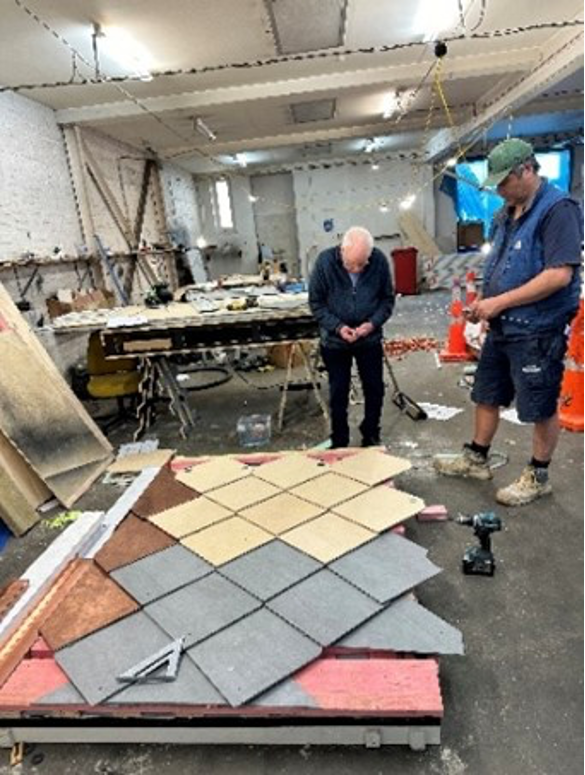
With such a difficult design, the project team decided to build a prototype model of the roof which proved invaluable in finalizing the tile, flashing layout and fixing details.
“There were so many intricacies to the roof; the overlaps and spaces between the tiles had to be precise, so we tried a lot of different options using finally sectional drawings in ArchiCAD as an aid to resolving these. The traditional imported European fixings with copper nails and disc rivets weren’t going to work in terms of longevity, so we ended up designing our own fixing system”.
“The copper edge flashings were also a little difficult to produce because there weren’t too many details in the original John Scott drawings. We eventually used photographs of the original roof and scaled them to try options on the model.”
The timber mullions and frames on the coloured acrylic windows will be also repaired, strengthened and repainted as part of the project.
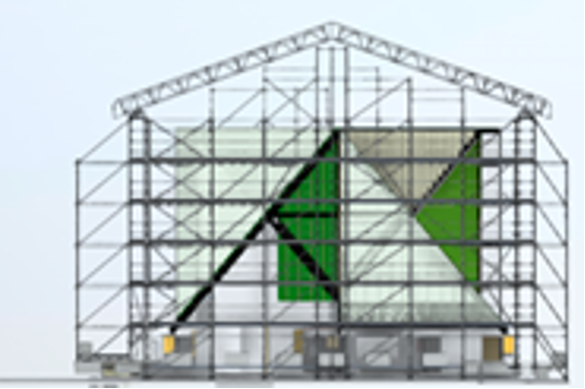
The re-roofing and window refurbishment project began with the building fully enclosed by scaffolding and white plastic shrink wrap for weather protection.
The project is anticipated to take about nine months.
Your gift to Futuna’s Future restoration fund will uphold the legacy of the heritage building, designed by John Scott in 1958, allowing future generations to immerse in the mauri, or life force, of New Zealand’s most significant 20th-century architectural building.
We are incredibly grateful to those organisations that have supported the project including NZ Lotteries, Stout Trust, Lion Foundation, Wellington City Council and the Nikau Foundation.