
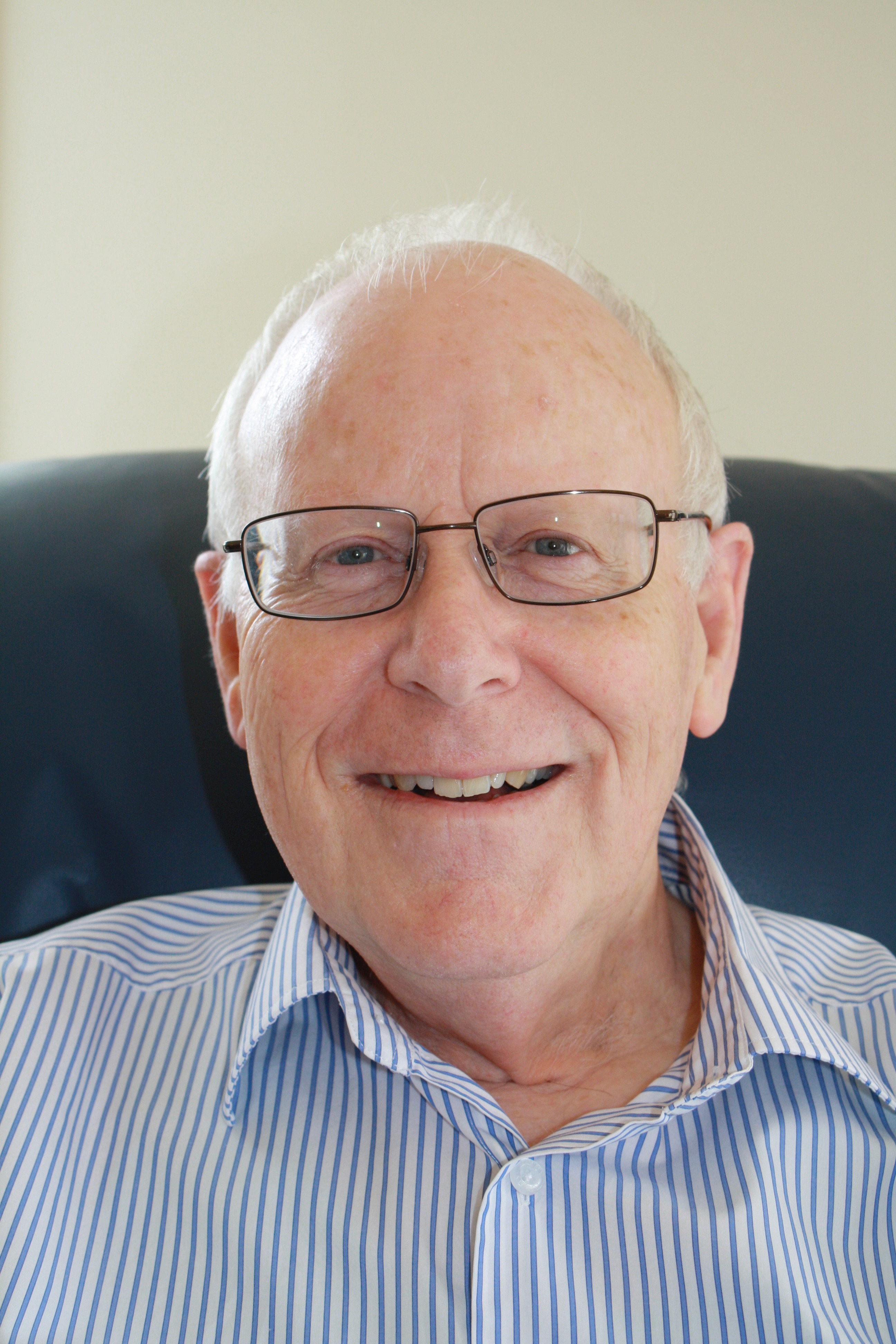
Win Clark is a long standing supporter of Futuna Chapel and has generously donated hours of his time and expertise to the Trust as one of New Zealand’s top heritage structural engineers. Although now retired, Win recently contributed significantly to the restoration of the Chapel roof alongside architect Dr Peter Parkes. The Futuna Chapel Trust is incredibly grateful to Win for his support.
When it comes to structural engineering in New Zealand, few names are as respected as Win Clark. With a career spanning decades and a portfolio that includes everything from hydroelectric projects to the seismic strengthening of heritage buildings, Win’s journey has filled his kete with expertise next to none.
“I began my working life with the Ministry of Works and Development (MWD) as an Engineering Cadet at the Hydro Design Office in Wellington. I was primarily involved in drafting for the Benmore Hydro Project (Intake and spillway structures) and early concept design for the Pukaki Canal Hydro Power Project,” describes Win of his beginnings.
After earning his engineering degree at the University of Canterbury, Win took on roles that saw him managing bridge construction, roadworks, and flood repairs in South Westland, before returning to Wellington to focus on structural engineering.
“All this early experience was invaluable for my future career as a structural engineer.”
Honing his skills under renowned engineers Otto Glogau and Trevor Mitchell, Win contributed to a wide range of public and government buildings, including the challenging refurbishment of the Old Government Building in Wellington—a project that sparked his lifelong interest in heritage structures.
“This was my introduction to working on heritage buildings for refurbishment and structural strengthening; a great learning experience.”
Win’s career continued to flourish at Morrison, Cooper & Partners (later Sinclair Knight Merz), where he led projects such as multi-storey office buildings, underground carparks, and the seismic strengthening of brick masonry structures.
“During the next 19 years, I was involved with a wide range of projects, such as the design and construction monitoring of multi-storey office and commercial buildings in Wellington, a 7-level underground carparking building in Bolton Street in Wellington and the refurbishment of brick masonry commercial buildings.”
A pivotal chapter in Win’s career began with his involvement in heritage preservation, notably for the Antarctic Heritage Trust and Heritage New Zealand. His leadership during the Canterbury and Kaikoura earthquakes was instrumental in assessing and recommending repairs for historic buildings, including the McLean’s Mansion in Christchurch.
“My involvement with Heritage New Zealand continues today for a wide range of heritage building projects, such as the old Government Building in Wellington and Kemp Mission House in Kerikeri.”
Win’s contributions have been recognized with numerous awards, including the Fulton-Downer Gold Medal, Fellowships with the Institution of Professional Engineers New Zealand and the New Zealand Society for Earthquake Engineering, and multiple project awards for heritage restoration.
In 2013, Win was engaged by the Futuna Chapel Trust to assess and model the structural integrity of the chapel.
“The Trust asked me to carry out a site inspection of the chapel structure, prepare a computer-based structural 3D model of the building frame, and analyse the model to determine member and connection stresses and strains for each of the Building Code load cases.”
His findings showed that the chapel’s structure was robust, achieving 70–80% of the New Building Standard for earthquake resistance and with the actual capacity likely higher due to quality materials and workmanship.
More recently as part of the chapel restoration, Win together with project architect Peter Parkes designed a world-first suspension system for the chapel’s roof tiles, to ensure they could withstand seismic, wind, and thermal stresses over a century of use.
“As with all projects, it is the initial thorough investigation of the building structure to gain a clear understanding of how imposed loadings are carried by the various members and joints and to understand the required performance of the various building elements. This process can take time to develop a full understanding, but it is the best way to work towards an appropriate and effective solution. Once that understanding is developed, the solution quite often comes when you wake from a good night’s sleep!”
Now retired from full-time consultancy, Clark continues to advise on heritage projects and encourages young engineers to prioritize deep investigation and creative thinking.
“Young engineers need to understand that the initial investigation for a new project is so important to understand the issues and provide guidance to an appropriate solution.”